
Nutrio
Designed an AI calorie tracker from the ground up, from product architecture and core user flows to launch and monetization.
- 26% Activation Rate
- 12% D7 Retention
- 9.5% Install → Paid
Context
Product and objective
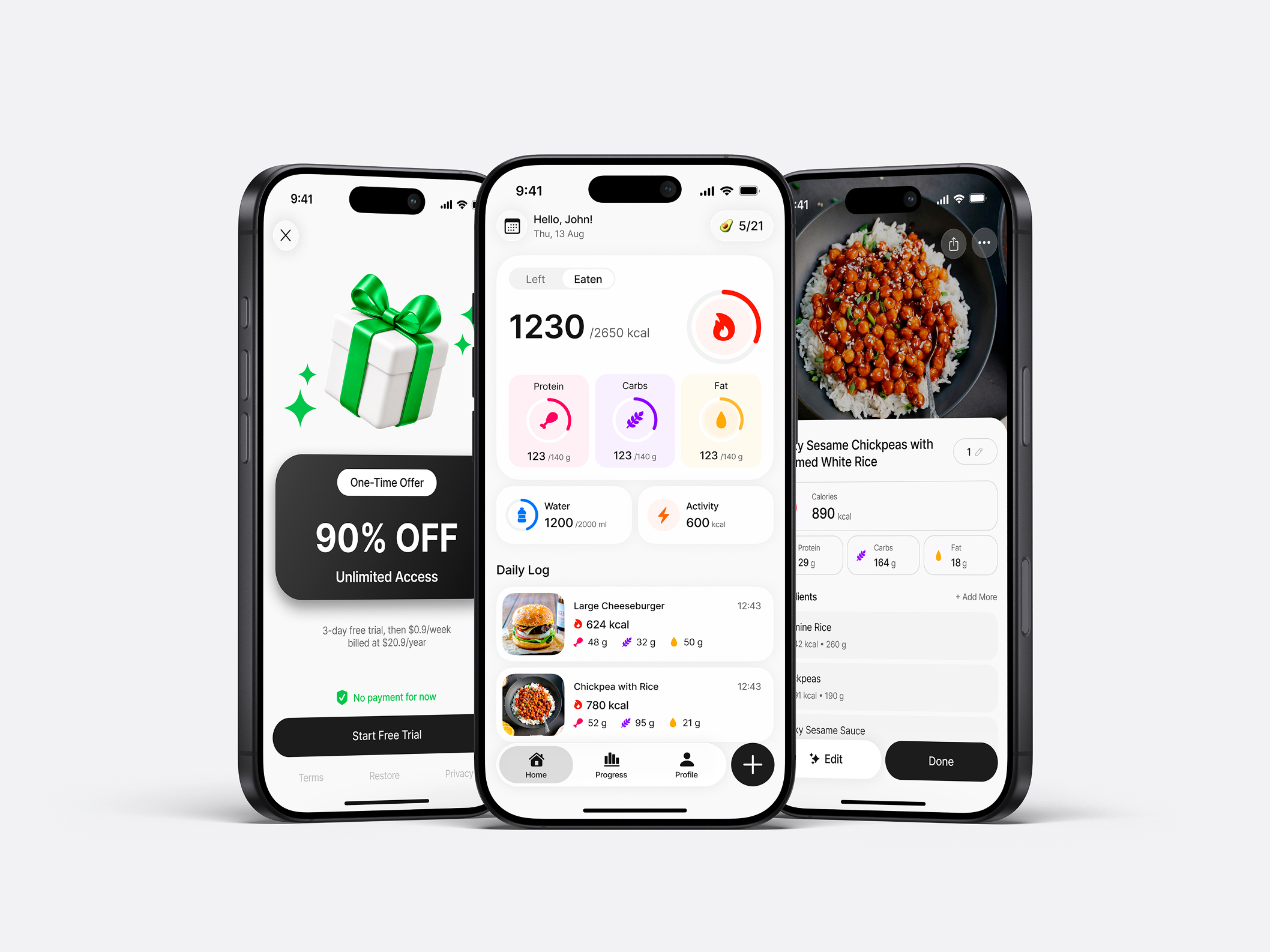
Nutrio is a nutrition tracking app: users photograph a meal, and AI identifies its ingredients and estimates calories and macronutrients. The app received 2,500 installs in its first month after launch.
The challenge was to make regular food logging easier without taking away control over data accuracy. For the first release, I defined the MVP architecture, designed the core flows, and integrated subscription offers.
My responsibility
I owned product design: architecture, onboarding, AI Scan, the food diary, and monetization. I also helped choose the MVP features and prepare the product for launch.
Research and strategy
Category analysis
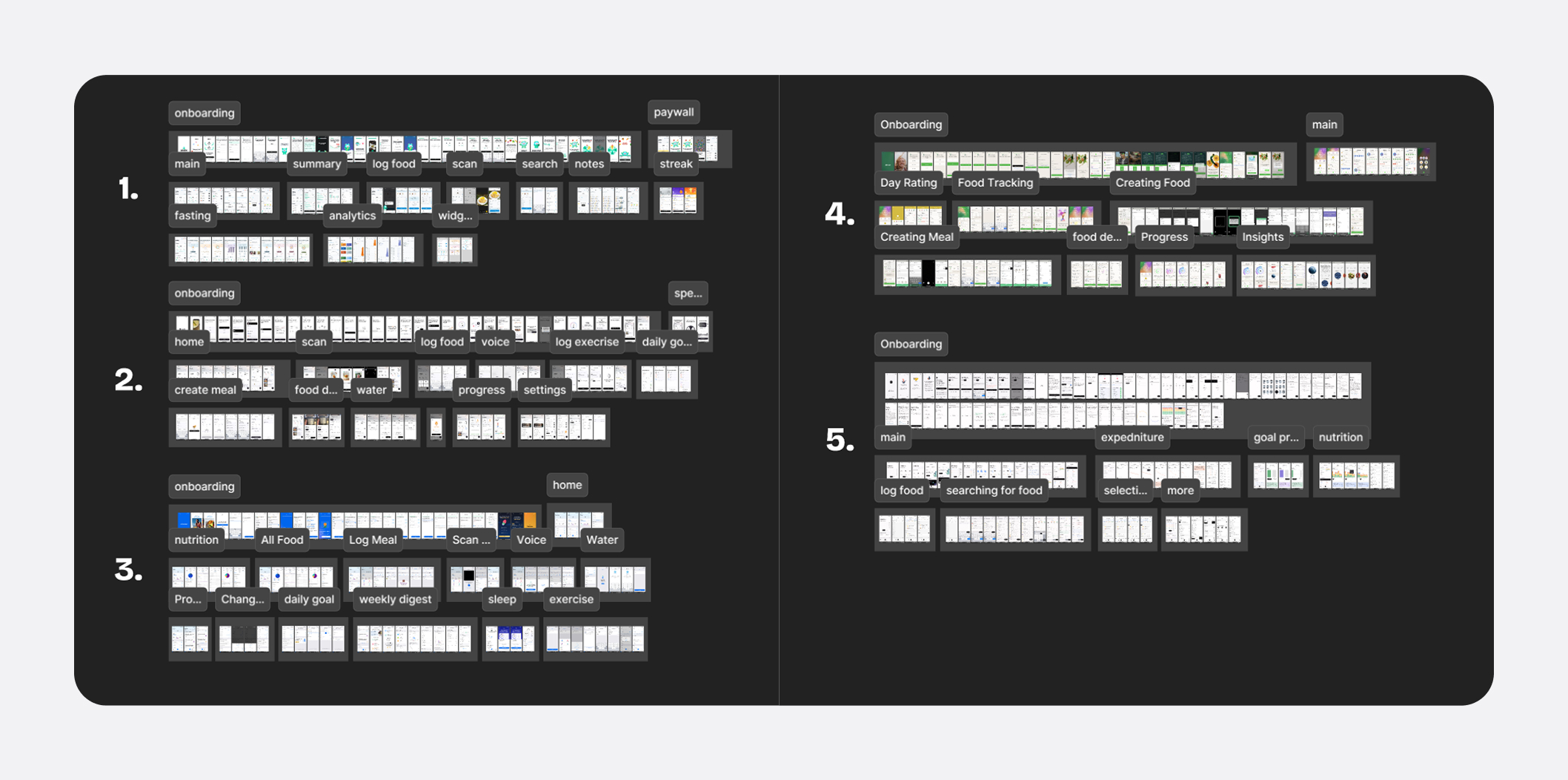
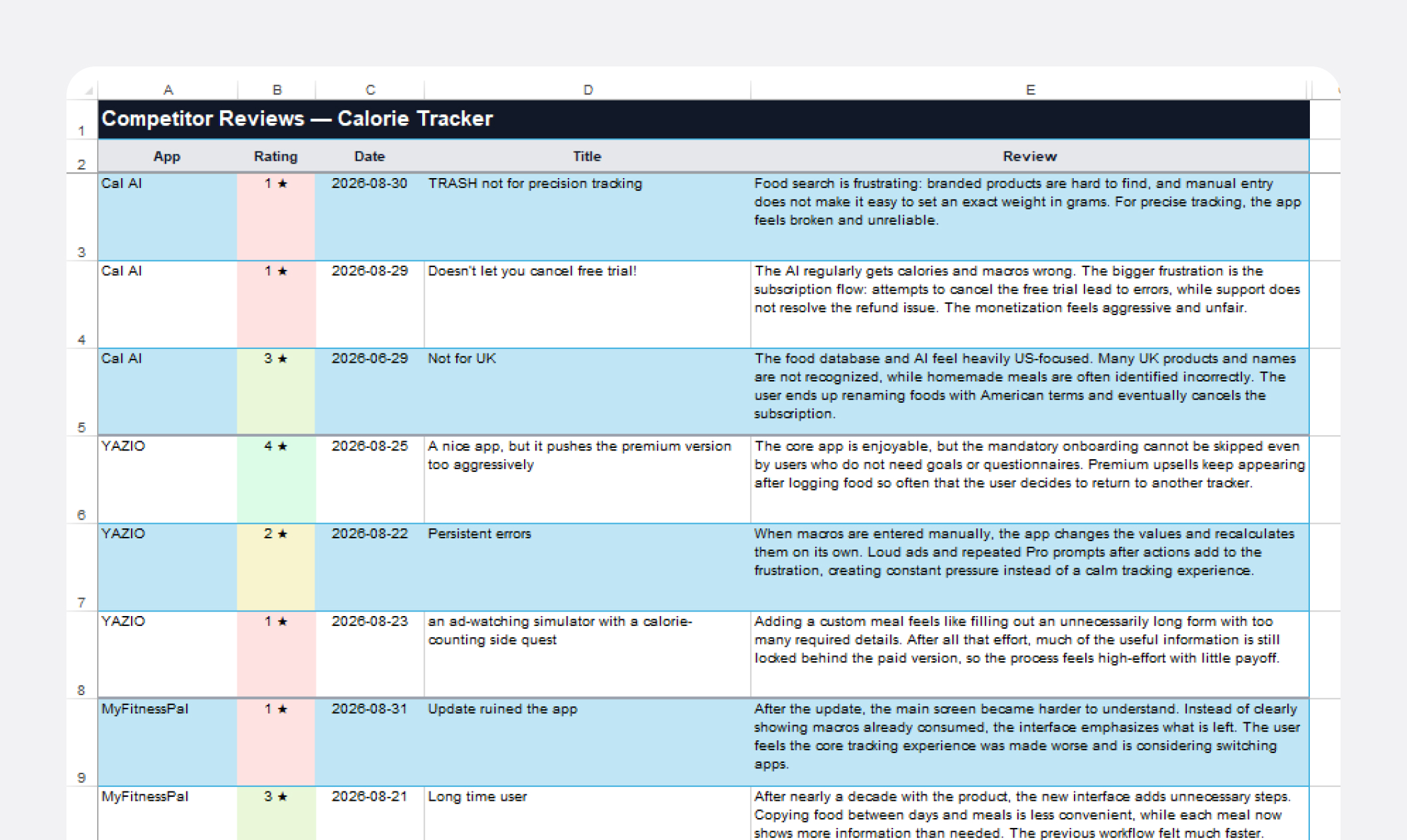
The central trade-off in food logging is speed versus control over accuracy. Comparing apps made it clear: manual entry takes repetitive effort, while AI speeds up input but can misidentify ingredients and portion sizes. I reviewed entry methods, diaries, and AI features.
That led to a working hypothesis: fast AI input would help with regular logging if results were easy to review and correct.
Jobs to Be Done
When I am trying to manage my diet, I want to quickly log what I eat without searching for every ingredient manually, so I can understand my daily balance and stay on track toward my goal.
This working formulation drew on the category analysis and guided the design. Validation against actual usage remained a task for after launch.
MVP architecture
A daily loop connecting food entry to a personal goal became the foundation of the MVP:
Recognize
Review
Save
Track progress
AI Scan became the primary input method. Between recognition and saving, I kept a review step with the option to correct errors. Saving updates the daily balance, so users see both the recognized meal and how it relates to their goal.
Product design
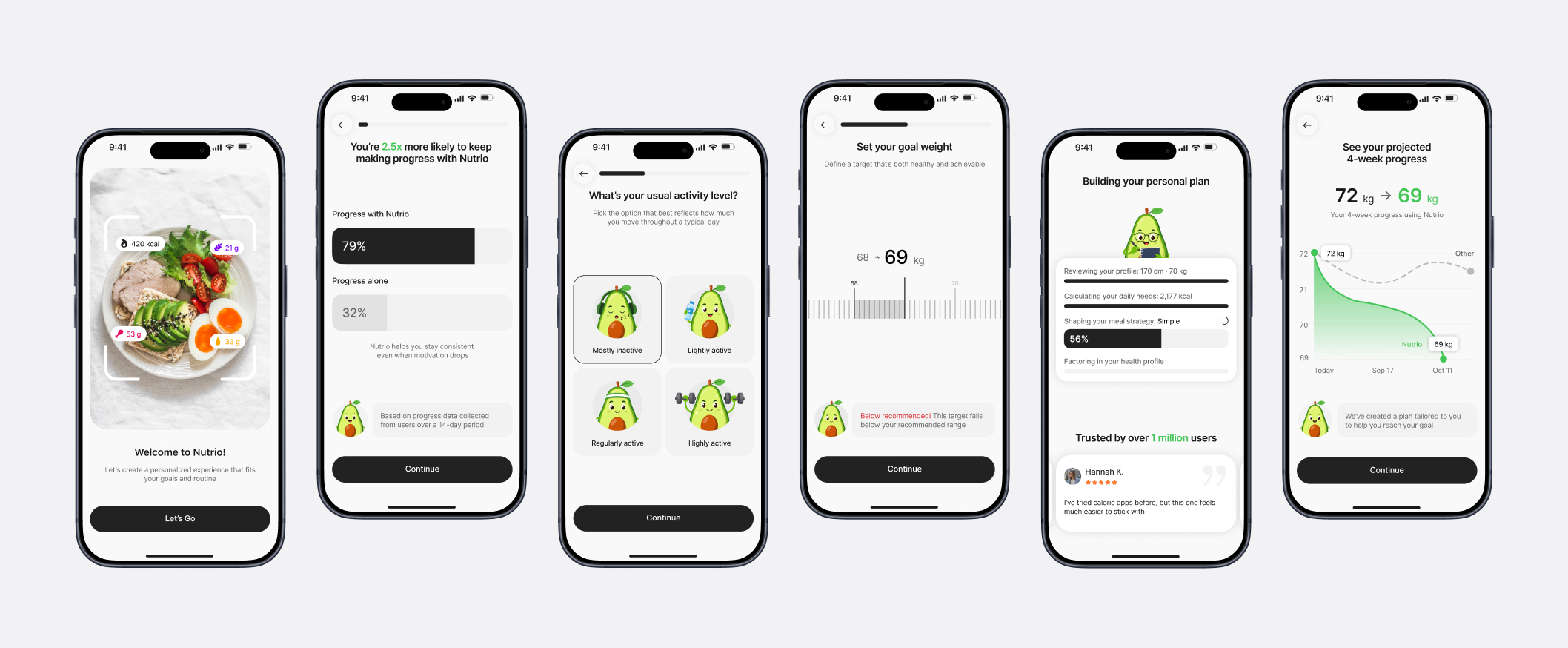
Personalized onboarding
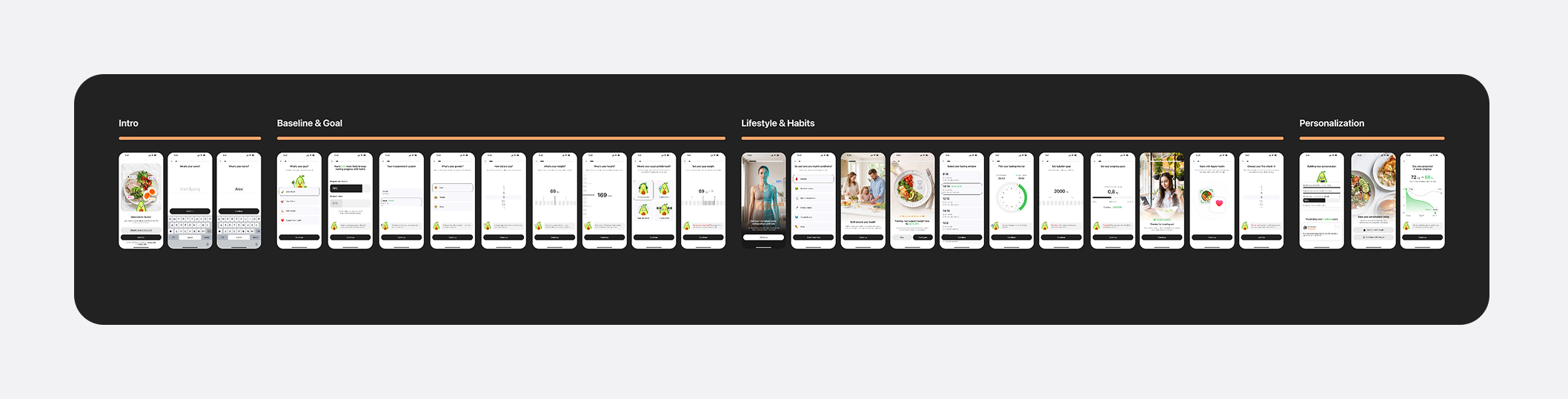
Onboarding questions lead to a visible outcome: a personal calorie target in the diary. I built the first-launch flow around the goal and measurements needed to calculate it, connecting the information collected to everyday use.
AI Scan
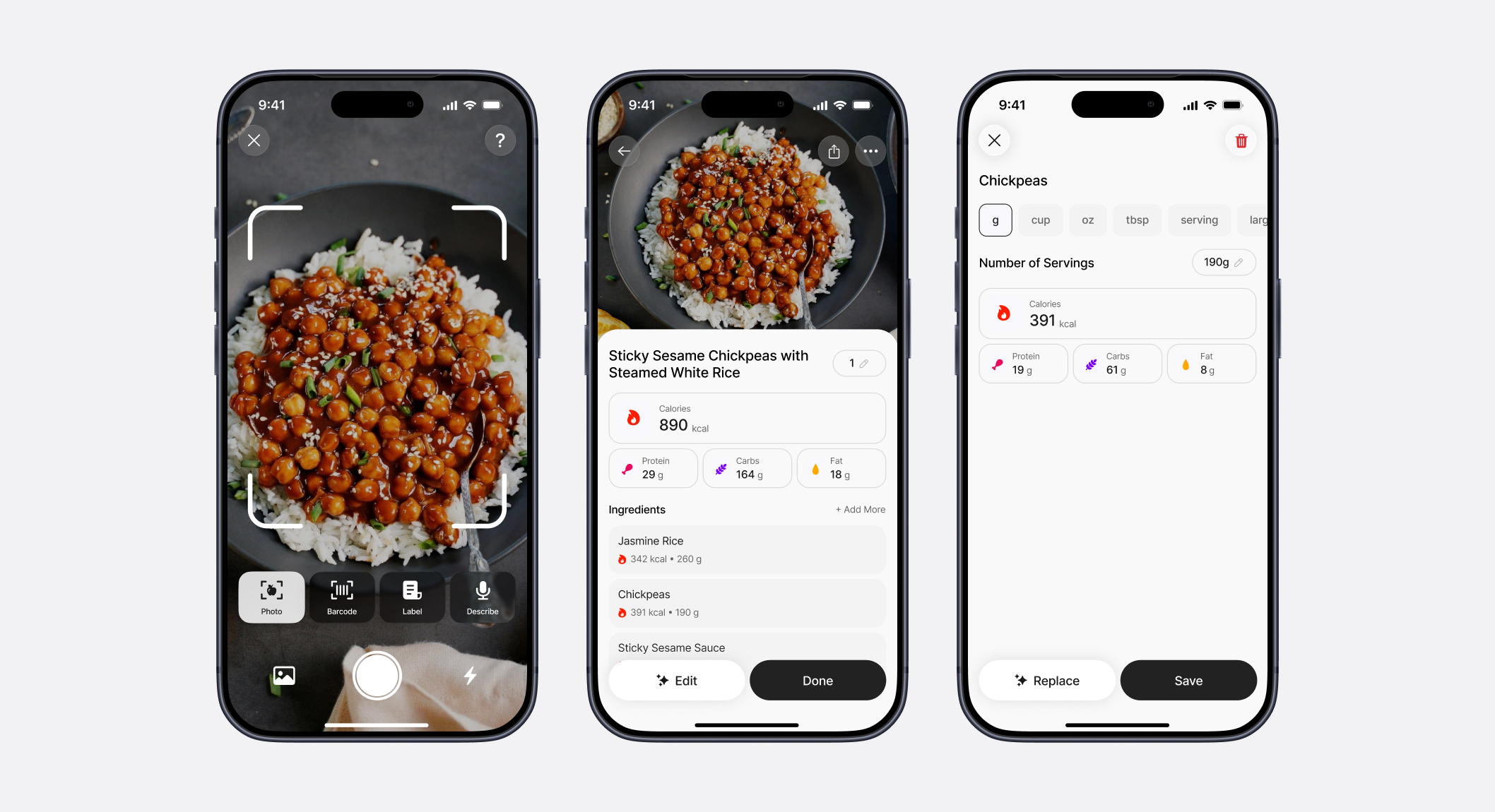
AI Scan needs to produce a usable food entry quickly, with room to correct mistakes. I placed a review screen between the photo and saving, with editable ingredients, calories, and macronutrients.
Reviewing a result does not require editing every detail: users can accept it or correct an error. This keeps entry fast even when recognition makes mistakes.
Food diary and progress
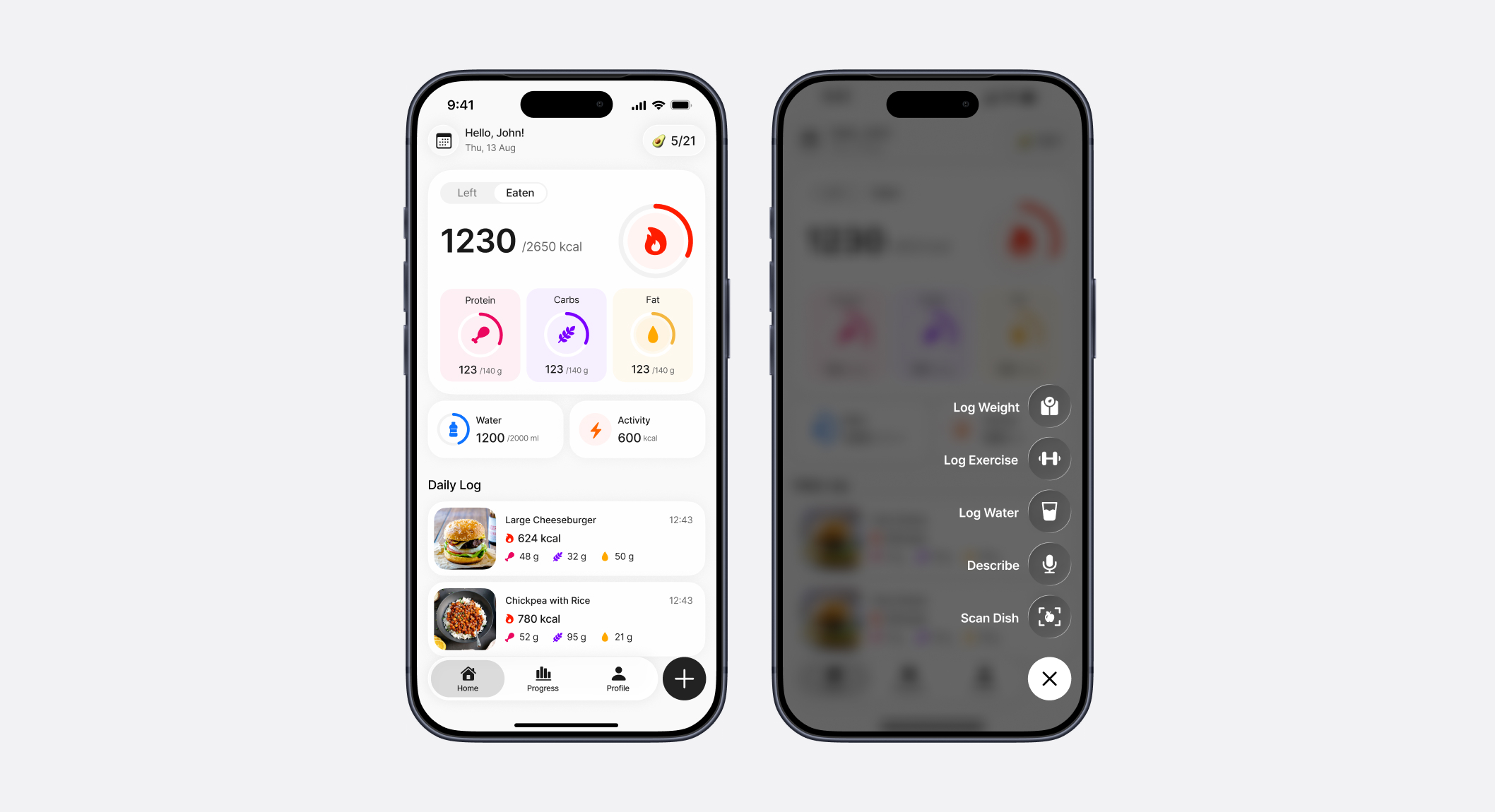
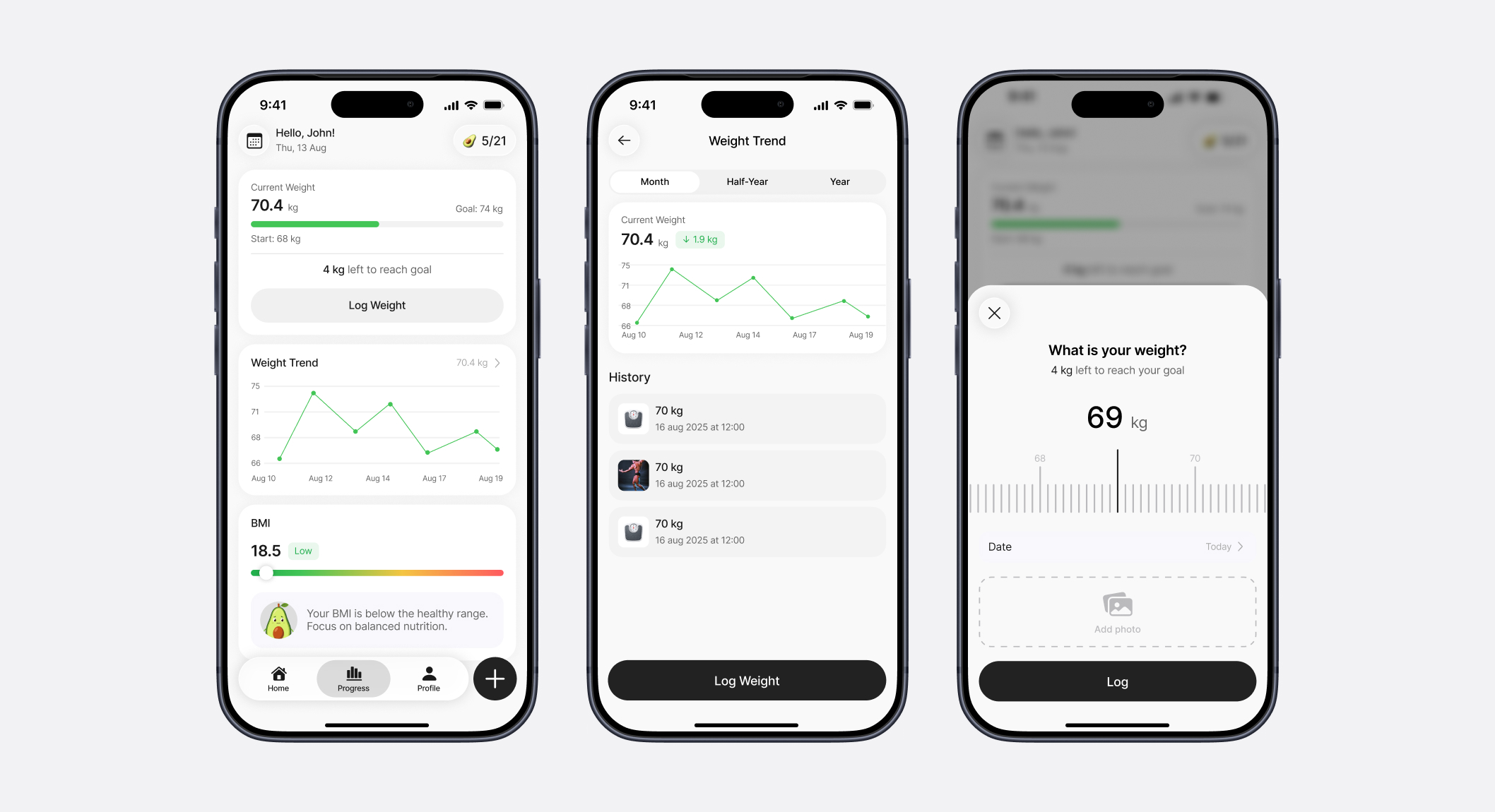
The daily balance became the diary’s main point of reference. I organized the target, consumed and remaining calories, macronutrient progress, and food history around it: an overview first, then individual entries.
Saving a meal updates the balance, immediately showing how much is left toward the goal. Analytics complements this daily view with progress over time.
Monetization
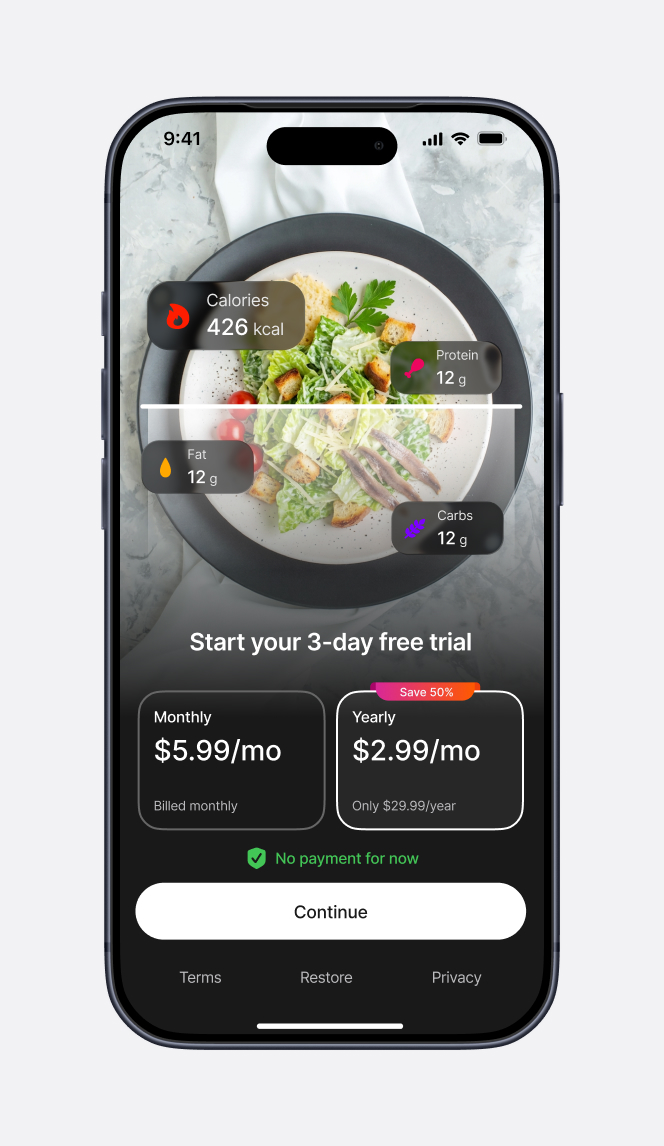
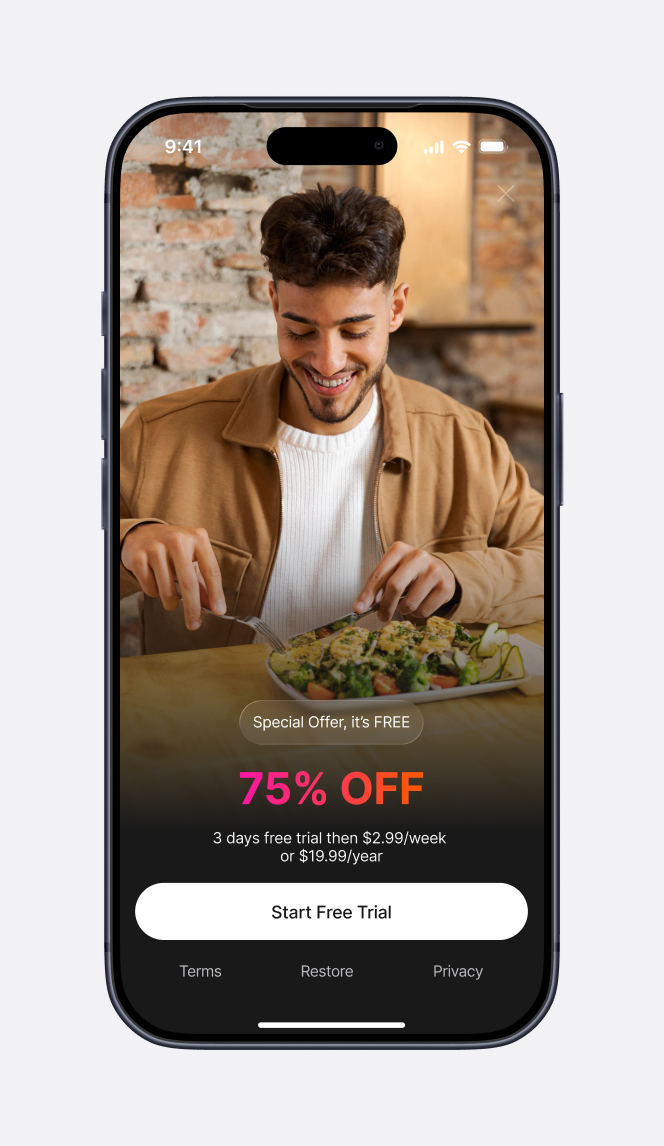
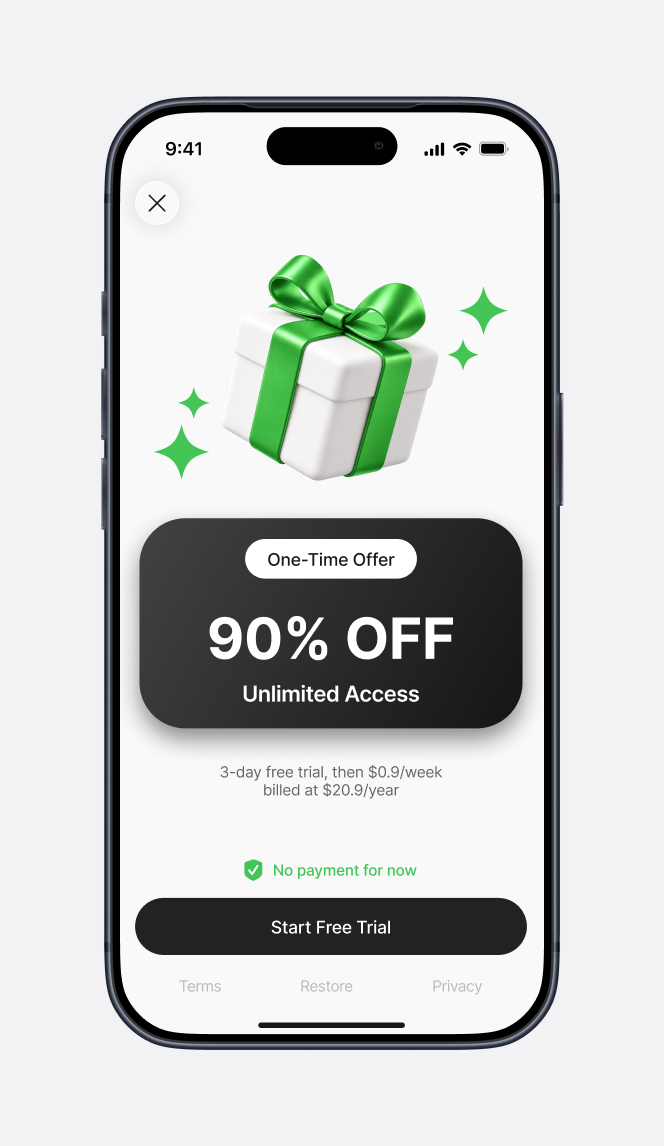
The Basic Paywall presents the main subscription offer after onboarding. Users who decline it see an alternative offer with a 75% discount, while the first AI Scan is followed by a contextual One-Time Offer.
The post-scan offer lets users reconsider a purchase after experiencing the core mechanism. Whether it performs better than an earlier offer is a hypothesis that needs a separate test.
Results
MVP launch
The initial metrics needed to show whether users saved scan results, returned to the app, and were willing to pay:
Activation Rate tracks user activation in the app’s core flow. D7 Retention measures return on the seventh day after installation. Install → Paid counts installs that resulted in a paid subscription.
These are initial product metrics, not improvements over a previous version. They provide a baseline for further testing but do not isolate the effect of design or individual subscription offers.
Next steps
The next priority is to understand why some users do not save their AI Scan results and what brings them back to the diary. The effectiveness of post-scan subscription offers needs a separate test.
Explore another project
Zeno