
Onboarding & Paywall Growth Framework
A practical framework I developed to identify opportunities for growth between an app’s first launch and payment, using product data, market research, and a continuous cycle of experiments.
Why a framework helps
Onboarding and paywall optimization can easily become a series of disconnected tests: reorder screens, rewrite a headline, add a trial, or borrow a competitor’s approach. Without a shared process, it becomes difficult to understand why a change worked and what to test next.
Across more than 12 large mobile products, I developed an approach that helped increase revenue by 15–30% without additional spending on advertising or traffic acquisition.
A strong CRO process starts with understanding the product, rather than a redesign: where users drop off, what creates friction, and how effectively the experience communicates value.
Framework overview
The framework has two layers: a decision-making process and the areas where we look for growth opportunities.
Stages
Product analysis → Market research → Prioritization → Hypothesis development → Experiment → Learning and iteration
This is the sequence of work, from understanding the product and its market to running experiments and building on what we learn.
Optimization areas
Funnel structure · Value communication · Personalization · Paywall timing · Pricing and offers · Paywall UX and design
These areas provide a set of lenses for analyzing the onboarding and paywall funnel. Depending on the problem, an experiment may address one area or several at once.
The process repeats: new data and experiment results inform the next cycle.
| Stage | Key question | Evidence | Outcome and decision |
|---|---|---|---|
| Product analysis | Where do users drop off, and what prevents them from seeing value? | Step conversion, drop-off, segment differences, and the experience itself: what users see and do. | A map of problems and growth opportunitiesConnect signals in the data to specific barriers in the user journey. |
| Market research | Which approaches address similar challenges? | Competitor and category-leading funnels: value communication, personalization, paywall timing, and offers. | Directions worth exploringUse market patterns as a source of ideas, not proof that they will work. |
| Prioritization | Which problem should we investigate first? | The scale of the problem, potential metric impact, strength of the evidence, and implementation effort. | A reasoned testing roadmapChoose the next focus and understand why it matters more than the alternatives right now. |
| Hypothesis development | Why should this change influence behavior? | A connection between the problem, a plausible cause, the proposed change, and its expected effect, with a metric to measure it. | A testable hypothesisMake the causal logic explicit: what changes, for whom, and what result we expect. |
| Experiment | How do we test the hypothesis and evaluate the outcome? | The scope of the change, the revised flow, target metrics, and predefined criteria for supporting or challenging the hypothesis. | A test with clear evaluation criteriaCompare the effect with the hypothesis. Evaluate offers beyond the first purchase. |
| Learning and iteration | What did we learn, and what should we test next? | Changes in metrics and behavior, and responses to the value proposition and offer. Tests without positive uplift can still be useful. | Evidence for the next decisionDocument what we learned, rule out unsupported directions, and refine the next cycle. |
Optimization areas
These areas break the onboarding and paywall journey into distinct parts that can each influence overall conversion.
They make diagnosis more precise: is the problem in the flow’s structure, the way value is communicated, personalization, paywall timing, or the offer itself?
1. Funnel structure
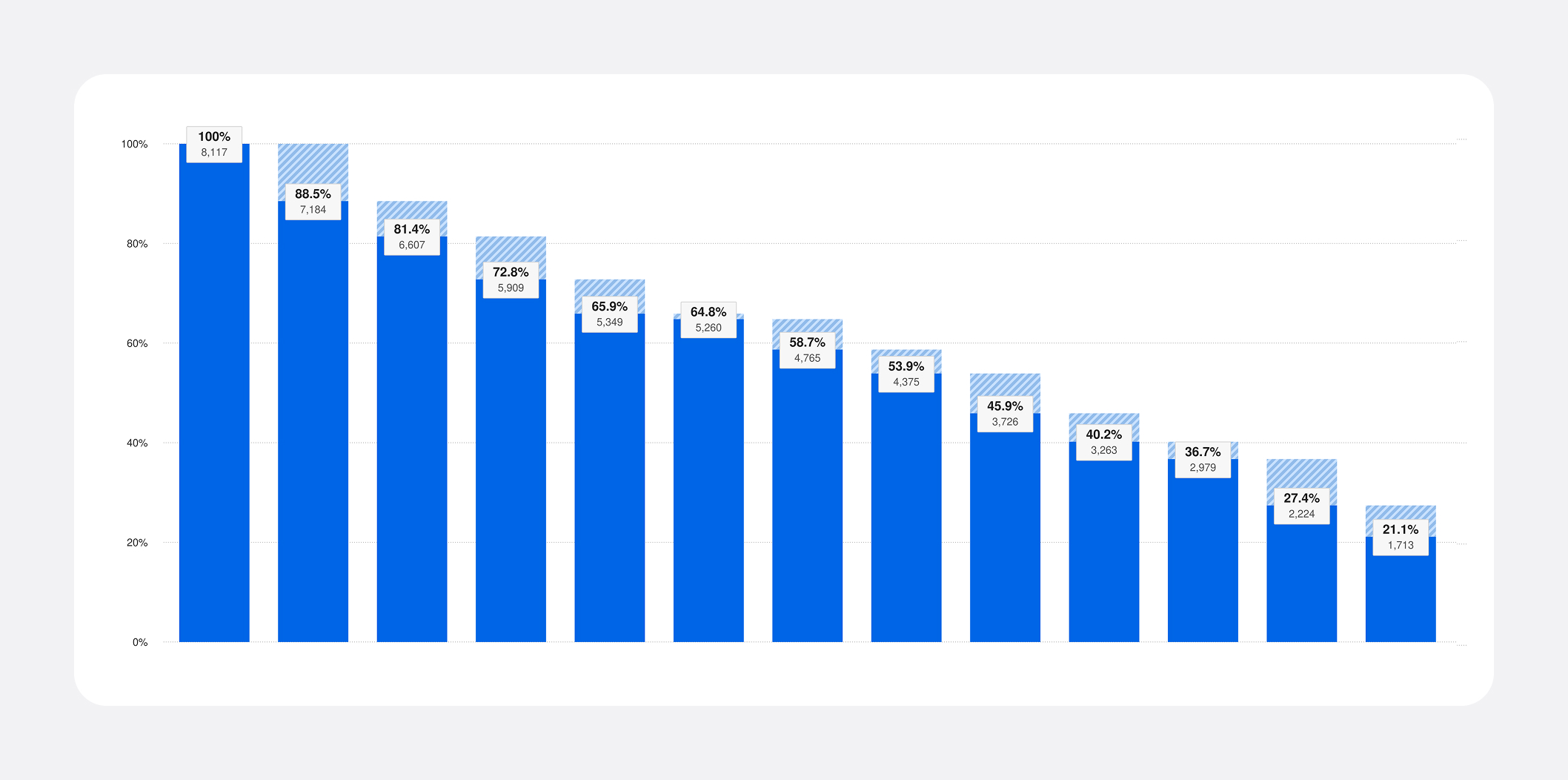
Structure determines how users move from first launch to the paywall: how many steps they complete, the order in which they receive information, and where they make decisions.
I examine step-by-step drop-off, whether each screen needs to be mandatory, branching, and overall friction. The goal is to remove unnecessary steps and make each remaining one contribute to a clearer understanding of the product’s value.
2. Value communication
This area examines how well the product communicates its value before asking users to pay.
It covers more than individual headlines. The entire narrative matters: the problem it establishes, the outcome it promises, the benefits it reveals, and the doubts it addresses along the way.
3. Personalization
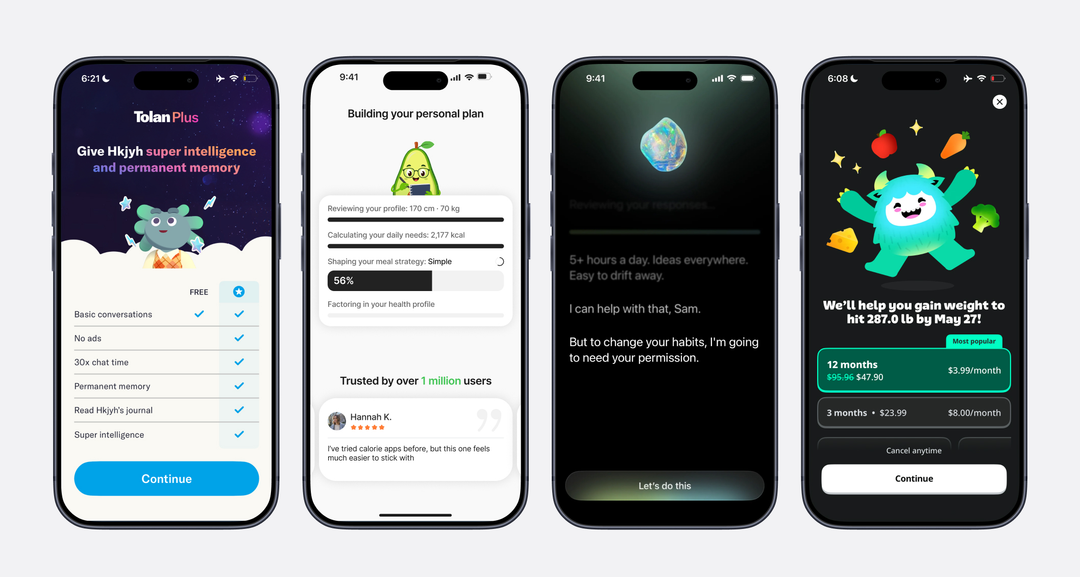
Personalization reflects how well onboarding responds to the individual user’s context: their goals, motivation, and answers throughout the flow.
If the information collected has no effect on subsequent screens, personalization is merely cosmetic. A strong flow uses it to shape value communication, recommendations, the onboarding structure, or the paywall itself.
4. Paywall timing
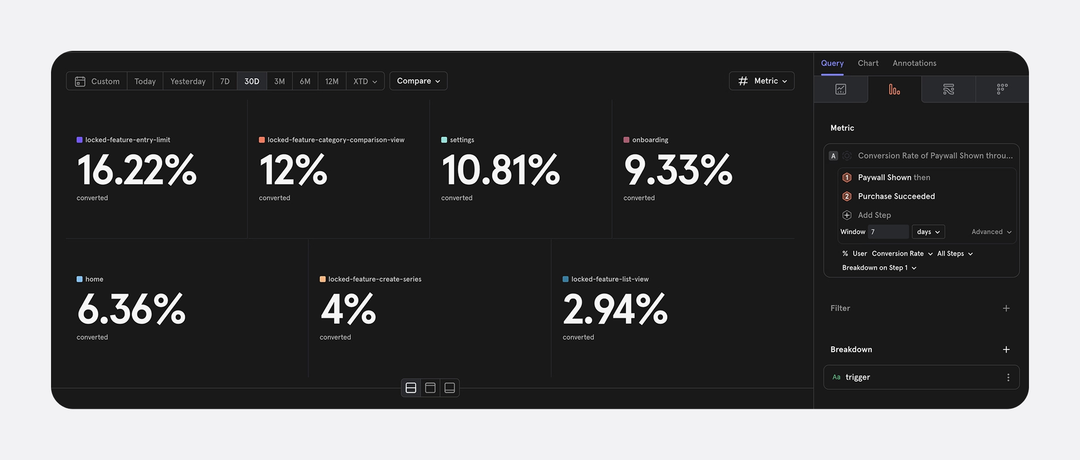
Even a well-designed paywall can underperform if it appears at the wrong moment.
Showing it too early asks users to pay before they understand the product’s value. Showing it too late can miss the point of highest motivation. The key is to understand what users have already seen and done when they reach the paywall.
5. Pricing and offers
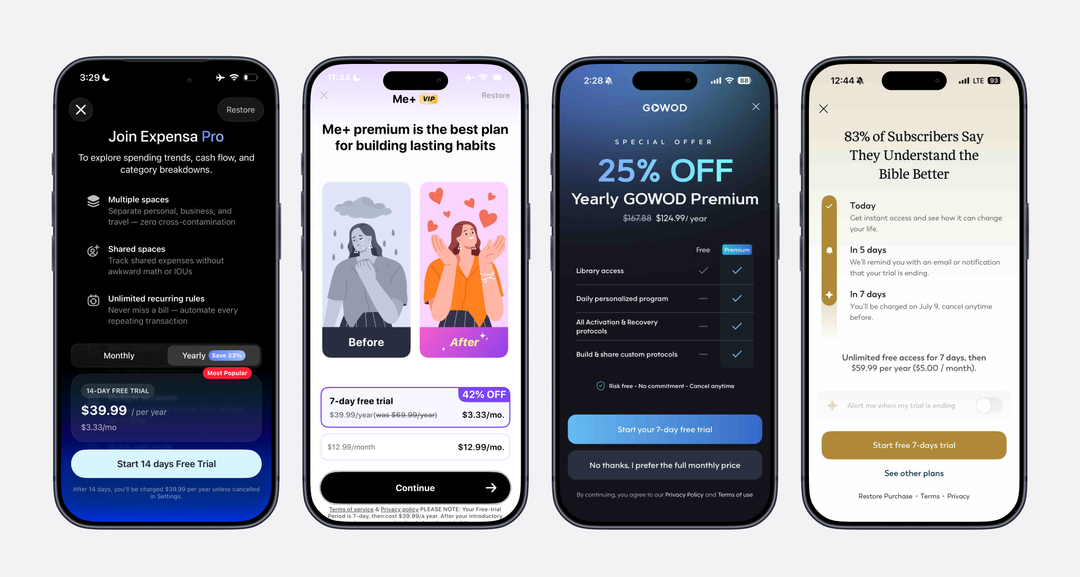
This area examines the offer itself: trials, plans, price, subscription length, discounts, and how options are presented.
The goal is not simply to find the lowest price. It is to understand whether the offer feels clear, worthwhile, and low-risk enough to commit to, and how changes affect both the first purchase and subsequent performance.
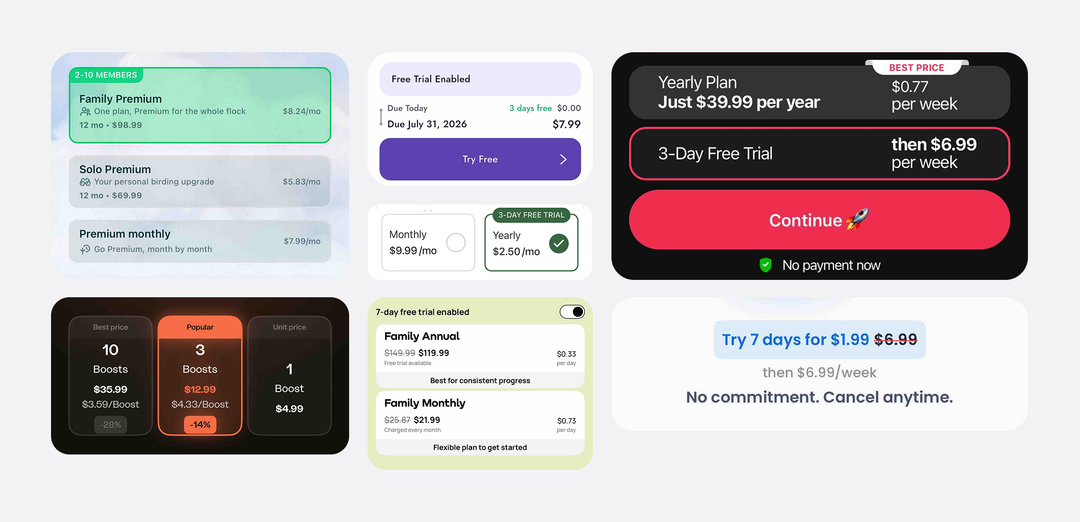
6. Paywall UX and design
The paywall is where product value becomes a concrete commercial offer.
Visual hierarchy, the CTA, plan selection, price presentation, emphasis, and friction all matter. A good paywall helps users understand the offer and make a decision without unnecessary uncertainty.
Process
The process connects analytics, research, and design into a consistent way of making decisions. Each new test does not require starting over: data and learning from earlier experiments build a foundation for subsequent iterations.
1. Product analysis
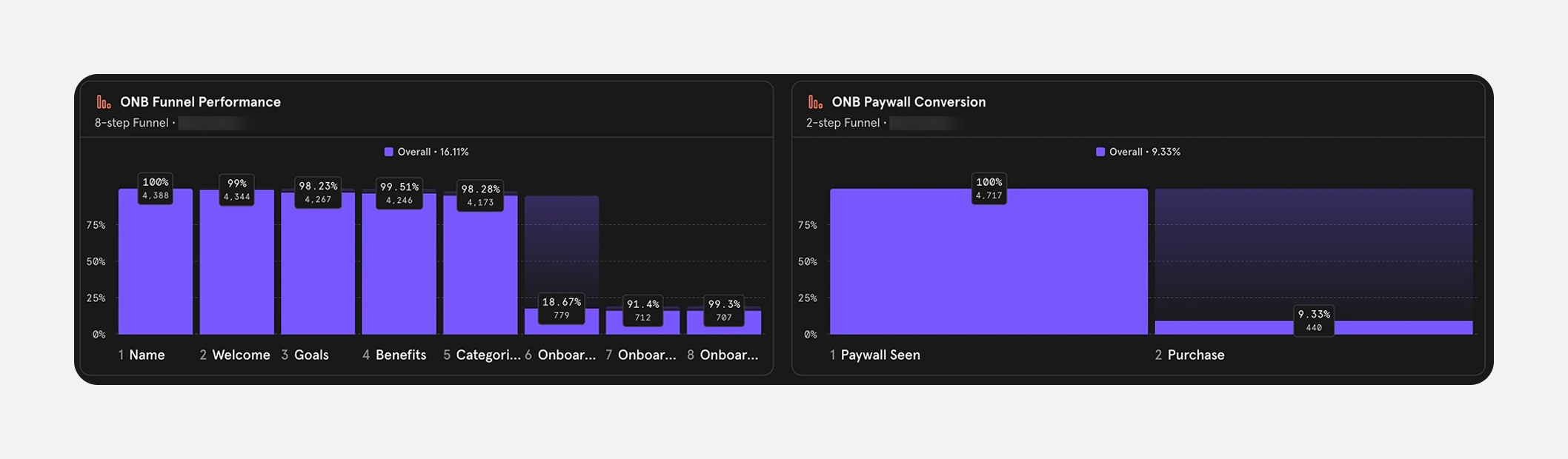
First, I establish the product’s current state before proposing solutions. I examine the journey from the beginning of onboarding to payment: step conversion, drop-off, behavior across segments, and the funnel’s key metrics.
I then connect the numbers to the actual experience: what users see at each stage, the actions required, and where friction emerges. The outcome is a map of problems and potential growth opportunities grounded in evidence, rather than a subjective assessment of the interface alone.
2. Market research
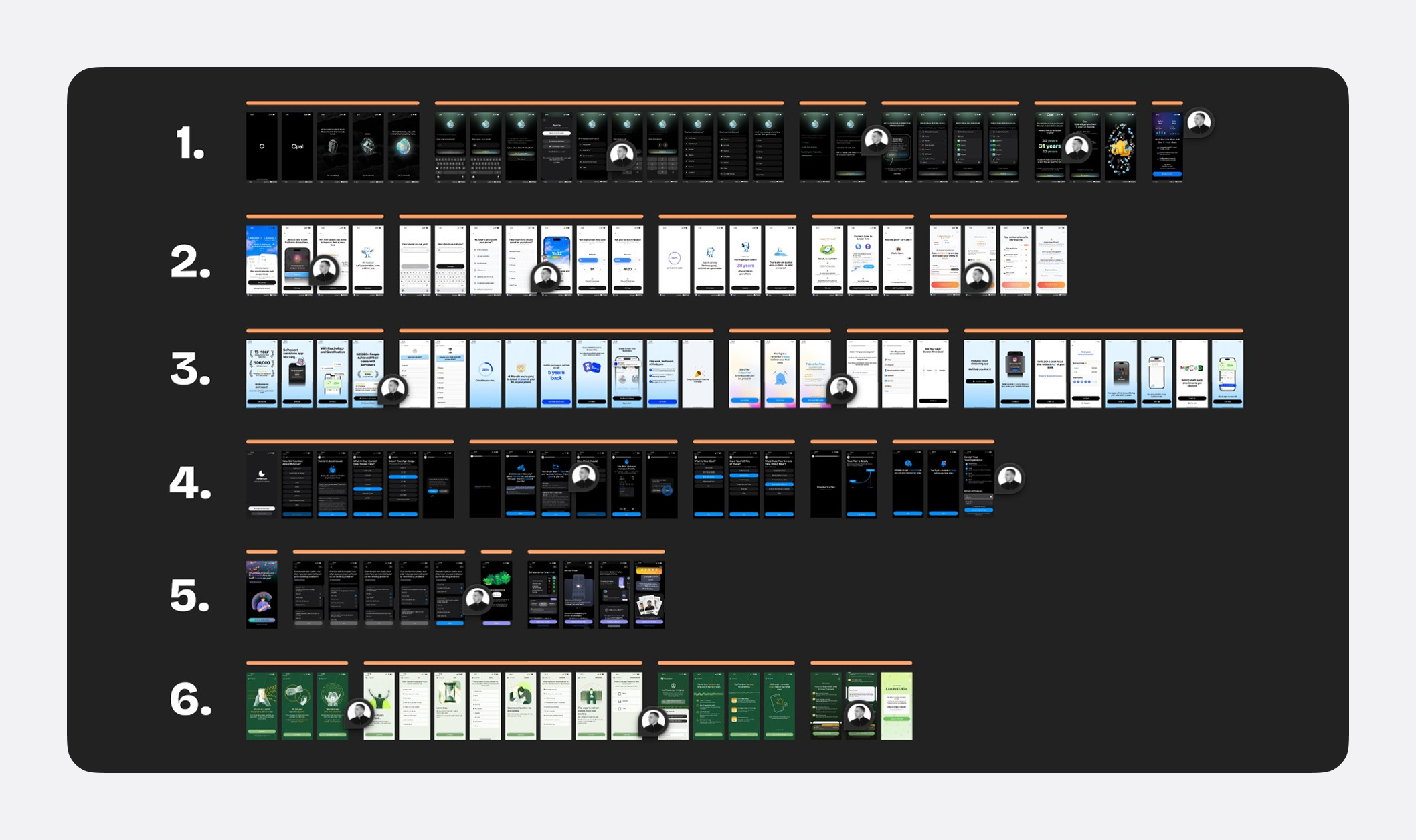
Next, I examine competitors, category leaders, and approaches already used in the market.
The goal is to identify patterns rather than copy screens: how funnels are structured, how value is communicated, where personalization appears, when the paywall is shown, and which offers are used. These observations provide additional ideas, but do not prove that an approach will work for this particular product.
3. Prioritization
Analysis typically reveals more potential improvements than can be tested at once. The next step is to decide which are most relevant to the product right now.
I weigh the scale of the problem, potential impact on key metrics, strength of the evidence, and implementation effort. The outcome is a reasoned sequence of areas to investigate and test, rather than a collection of disconnected ideas.
4. Hypothesis development
A growth opportunity becomes a hypothesis when it has a causal explanation: what is not working, why that might be happening, and what change could influence user behavior.
A good hypothesis is tied in advance to an expected outcome and a metric that can measure it. An isolated problem may call for one specific change; a systemic issue may require several connected hypotheses across multiple optimization areas.
5. Experiment
At this stage, the hypothesis becomes a concrete product change. I define the scope, design the revised flow or part of it, and choose the metrics used to evaluate the result.
An experiment may be focused, such as a change to an offer or paywall, or span the entire funnel when the problem is systemic. What matters is defining in advance what is being tested and which changes in user behavior would support or challenge the hypothesis.
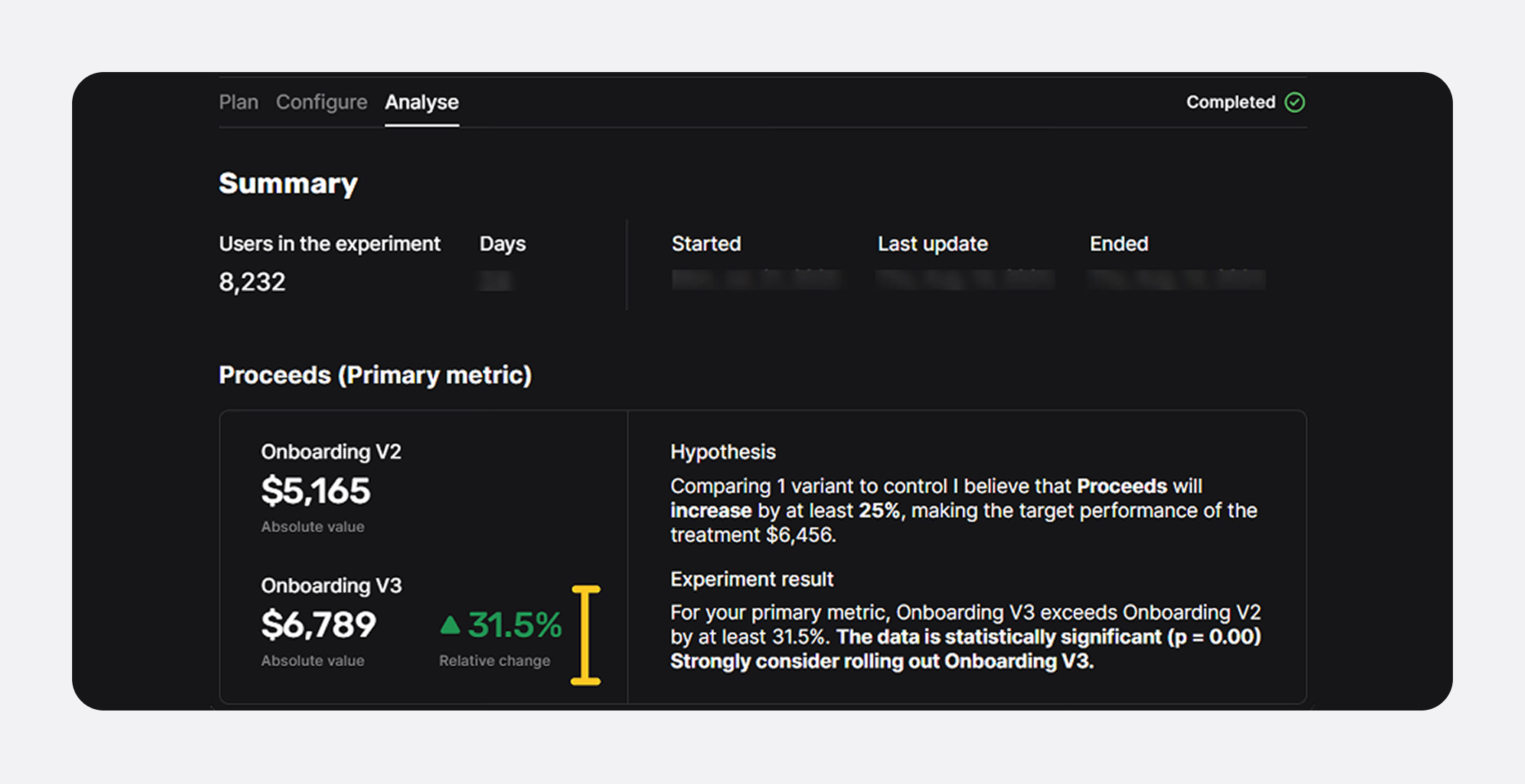
6. Learning and iteration
An experiment’s outcome is more than an increase or decrease in the target metric. I look at why users responded as they did and what that suggests about their motivation, perception of value, and behavior within the funnel.
A test without positive uplift can still produce useful learning and rule out an unpromising direction. I document these insights and use them to inform the next cycle. Over time, each experiment builds on an increasingly detailed understanding of the product and its users.
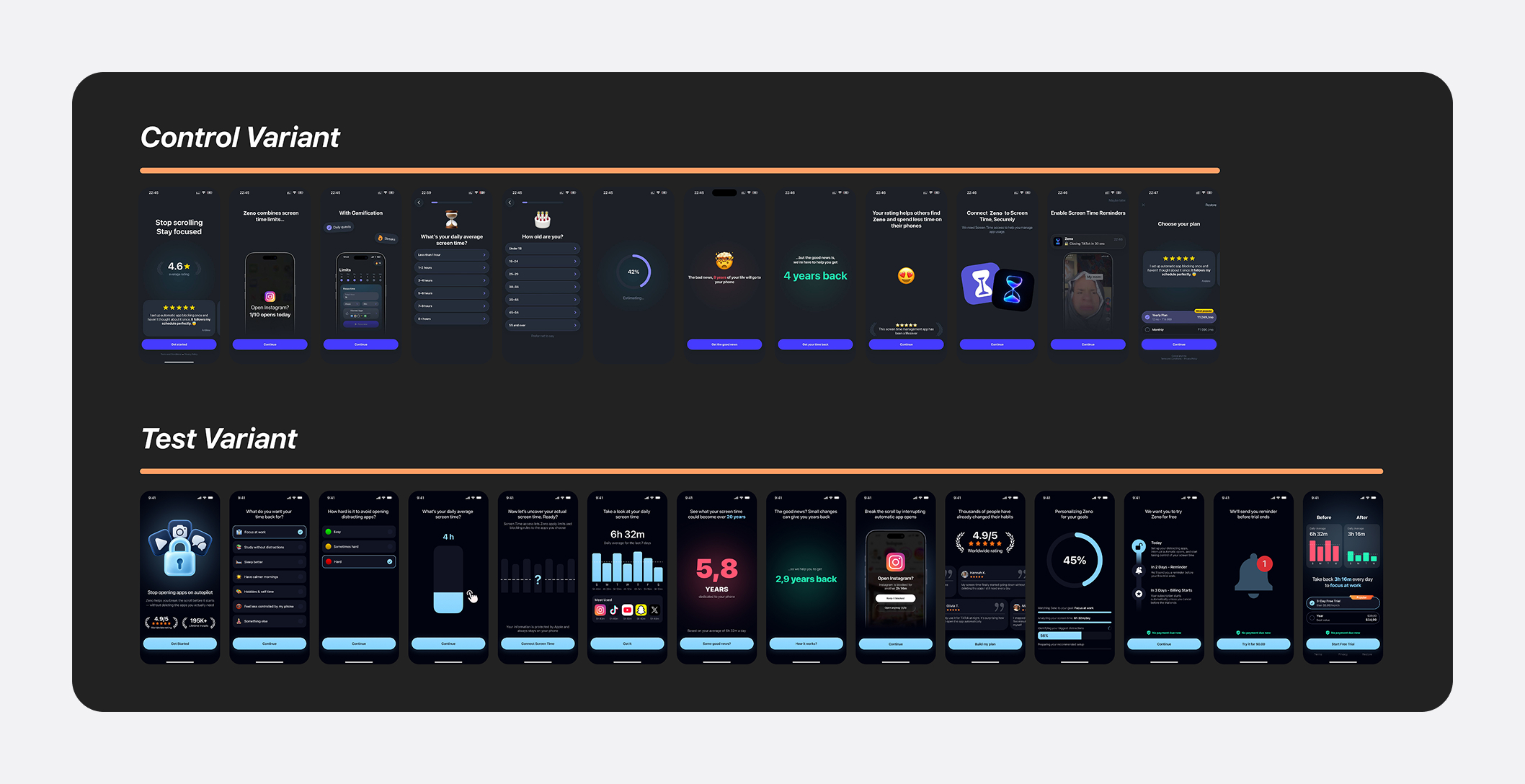
See the framework in action
Zeno · Onboarding and paywall optimization